

You’re Winning—So Why Does It Feel Like You’re Losing Yourself?
Your business is growing. Your team depends on you. Your LinkedIn looks like a highlight reel.
But you wake up tired. Not just physically, existentially. The kind of tired that no vacation, meditation app, or weekend “off” can fix.
This is what high performer burnout looks like. Not crashing dramatically. Not losing everything overnight. Just slowly… disconnecting. From your own joy. From your family. From yourself.
And if you’re like most high-achievers, you don’t recognize it—because you’re still “succeeding.” That’s what makes this kind of burnout so dangerous.
Let’s get honest about the signs—and more importantly, how to break the cycle before it breaks you.
Why High Performers Break Differently
High performers aren’t the type to fall apart. They’re the type to tighten up. Push through. Stack more wins on top of the emotional instability underneath.
But the cracks show up in subtle ways:
-
You check every box, yet feel strangely detached.
-
You show up to your kid’s event—and check Slack under the bleachers.
-
You finish your quarterly goals—and feel no satisfaction.
This isn’t laziness. It’s not entitlement. It’s emotional depletion dressed in discipline. It’s the most misunderstood burnout symptom in driven professionals.
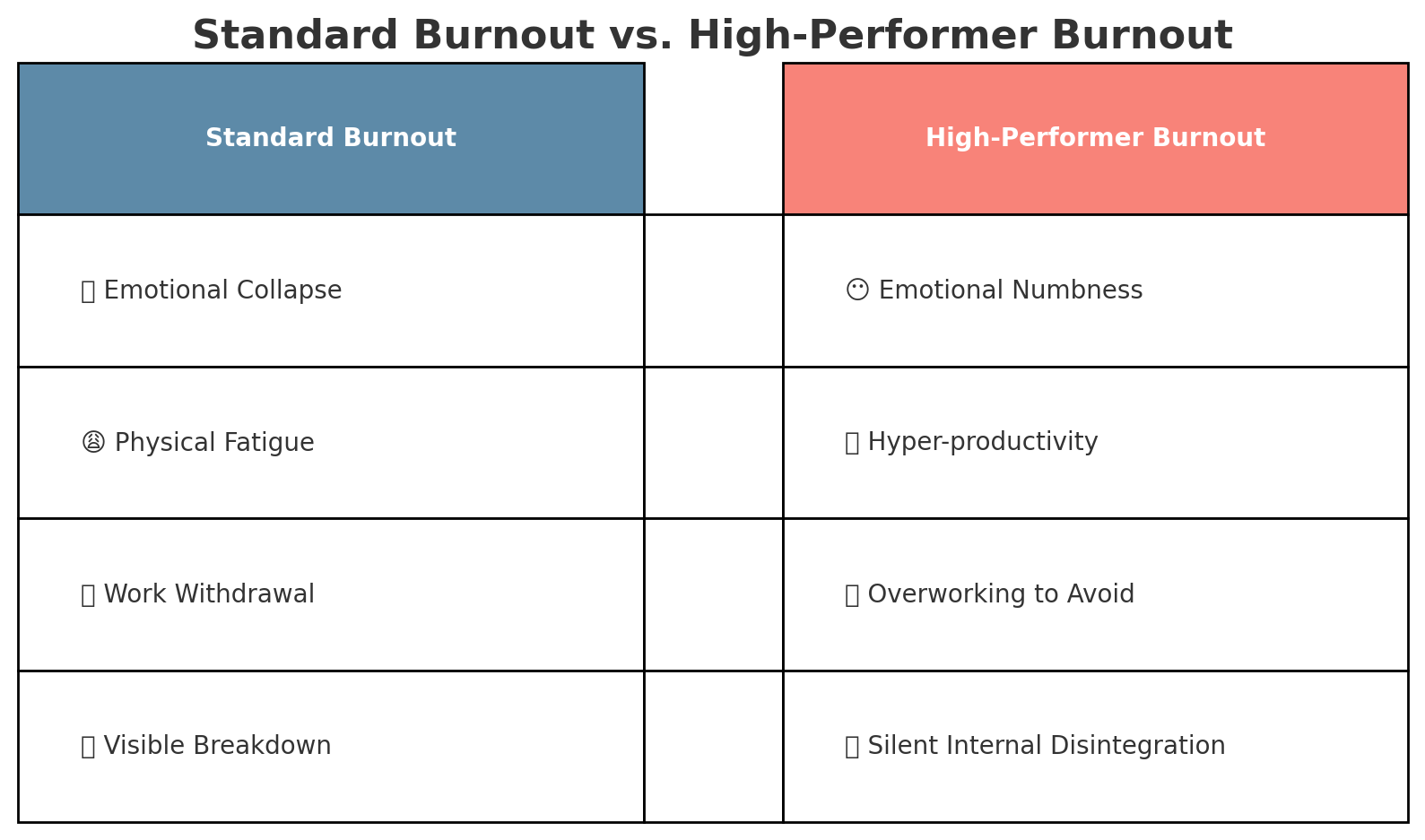
Standard Burnout vs. High-Performer Burnout
Top Signs You’re a High-Performer in Crisis
Here’s how to know you’re not just tired—you’re in a high-functioning spiral.
1. You’re Winning—But It Feels Empty
You hit the goal. The inbox is clean. The balance sheet looks great. But the feeling of “what’s next?” hits harder than the win.
One founder who applied to our leadership reset retreat said,
“I just closed our biggest deal ever. Everyone was celebrating. I left the room to cry in the bathroom—and I don’t know why.”
That’s not weakness. That’s misalignment.
2. You’re Exhausted, But Can’t Sleep
You’re in bed by 10, but your mind is pitching new ideas at 1 a.m.
Sleep isn’t restorative—it’s just delayed stress.
Chronic sleep issues are one of the clearest high performer burnout symptoms, and yet they’re often brushed off as “just part of the grind.”
3. Your Patience Is Gone (Especially at Home)
You’re measured with clients, generous with staff—but short with your kids.
Why? Because you’ve spent all day holding the business together with white knuckles, and your nervous system has nothing left to give.
And the people you love most are left holding the emotional overflow.
4. You Can’t Shut Off—Even on Vacation
You book the trip. You smile for photos. But mentally? You’re editing the next pitch deck.
You’re addicted to the adrenaline of progress. Stillness feels unsafe. But that’s not leadership—it’s survival mode.
5. You’re Numbing with Noise
Whether it’s endless podcast queues, back-to-back meetings, or one too many bourbons on Friday night—distraction has become your default.
You’re not just tired. You’re hiding from something that used to fuel you.
The Cost of Staying in the Cycle
When high performers stay in burnout mode, it doesn’t just erode energy—it reshapes identity.
Here’s what it costs:
-
Emotionally: Mood swings, numbness, imposter syndrome
-
Physically: Headaches, fatigue, immune issues, cortisol overload
-
Relationally: Distance from spouse or kids, isolation from friends
-
Professionally: Poor decision-making, reactive leadership, declining innovation
💬 “You’re operating at 50% capacity and calling it excellence.”
Why Traditional Self-Care Doesn’t Work for You
Let’s be real—bubble baths and breathing exercises aren’t cutting it.
You’ve tried meditation. You journaled. You even took a weekend off. But nothing changed.
Because most self-care advice assumes you have nothing to carry. You, on the other hand, have clients, payroll, marriage tension, and legacy pressure.
You don’t need platitudes. You need recalibration.
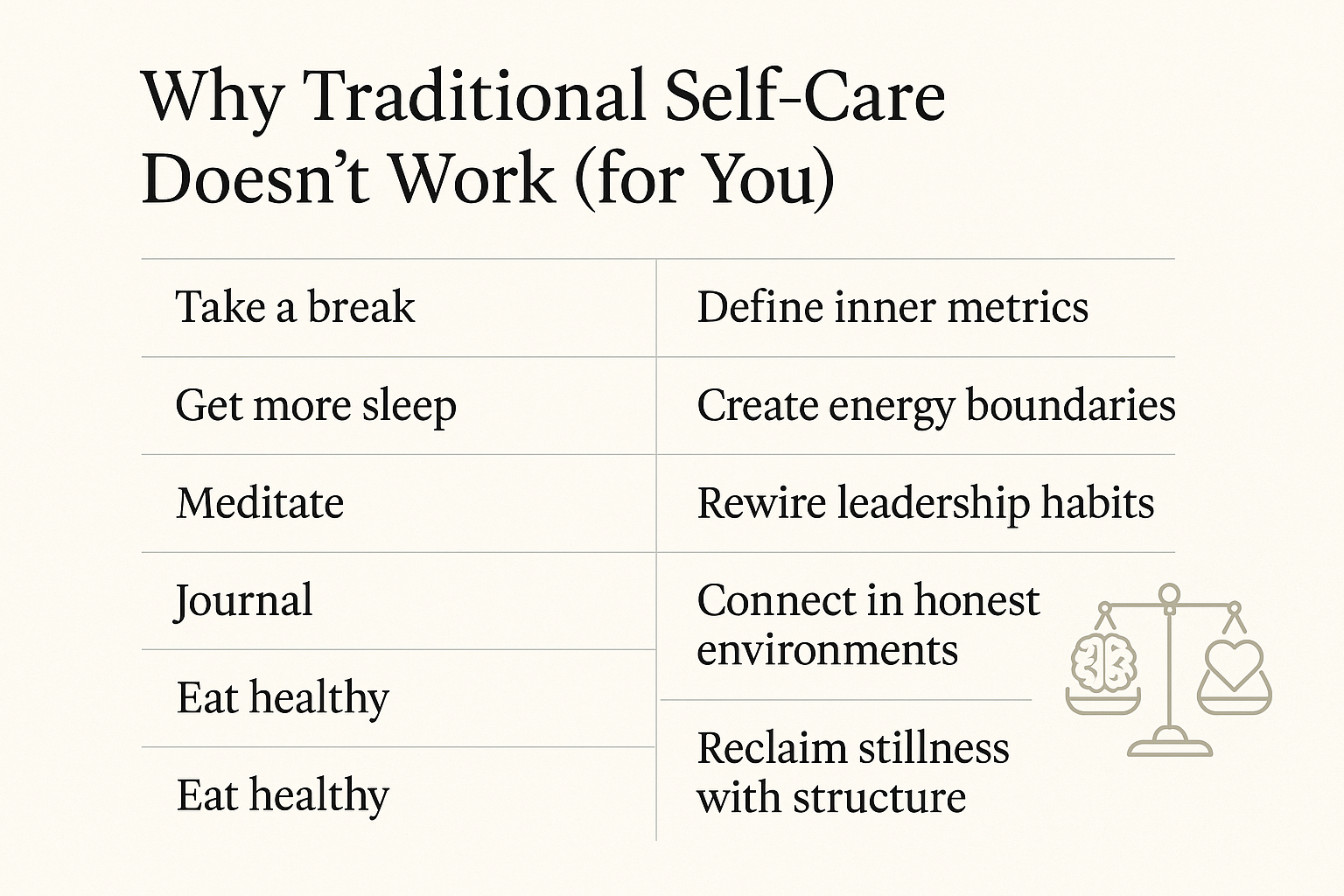
Why Traditional Self-Care Doesn’t Work (for You)
How to Break the Cycle (Without Burning It All Down)
1. Name the Truth
Say it without shame: “I’m not okay right now.”
Awareness isn’t weakness. It’s leadership.
2. Audit Your Calendar
If your schedule doesn’t reflect your values, your results won’t either. Where are you choosing urgency over importance?
3. Reset What Winning Means
Define success beyond income. Does it include peace? Presence? A thriving marriage?
If not—no wonder it feels empty.
4. Get in the Right Room
Join a high-performance men’s coaching group where results and reality can coexist. You need mirrors, not cheerleaders.
This is where clarity sharpens. This is where breakthroughs begin.
5. Schedule Your Leadership Reset
You don’t need a week in Bali. You need a strategic container to realign.
Apply to a leadership reset retreat designed for high-performing men ready to recalibrate direction, energy, and impact.
🧭 Not sure if you’re ready? Download the Burnout Recovery Checklist—it’s private, powerful, and built for men like you.
From Crisis to Clarity: What’s Waiting on the Other Side
When James—a 7-figure agency founder—came to us, he hadn’t taken a day off in 14 months. His revenue was up, but his marriage was on the edge, and his health was unraveling.
Fast forward 90 days:
-
He built a real leadership team.
-
Cut work hours by 30%.
-
Recommitted to family dinners and weekend bike rides with his son.
And guess what?
His business grew faster than before.
Because clarity breeds capacity.
📊 Visual Tip: Add a before/after bar chart labeled “The Real ROI of Leadership Clarity”
You Don’t Have to Collapse to Wake Up
You’re not weak for needing help. You’re wise for recognizing the cost of continuing like this.
You don’t need to surrender your ambition—you just need to lead from a place of integration, not exhaustion.
✅ Get your personalized burnout recovery roadmap.
✅ Apply now for a spot in our high-performance leadership reset retreat.
✅ Download the checklist and take the first step—on your terms.
Because real power isn’t in pushing harder.
It’s in knowing when to pause, pivot, and protect the life you’re building.